The Ultimate Guide to African Black Soap: Ancient Skincare for Modern Dermatology
Introduction:
The Dark Secret to Radiant Skin In the quest for flawless skin, the beauty industry in Europe and North America is returning to a centuries-old handmade remedy from West Africa. Known as Sabulun Salo in Northern Nigeria and Ghana, African Black Soap has transcended its humble tribal origins to become a global skincare phenomenon. But what makes this charcoal-colored bar so effective against acne, aging, and eczema?
What is Authentic African Black Soap? (The Science of Ingredients) Unlike modern commercial soaps that use synthetic chemicals, authentic Black Soap is made from 100% natural, locally sourced ingredients.
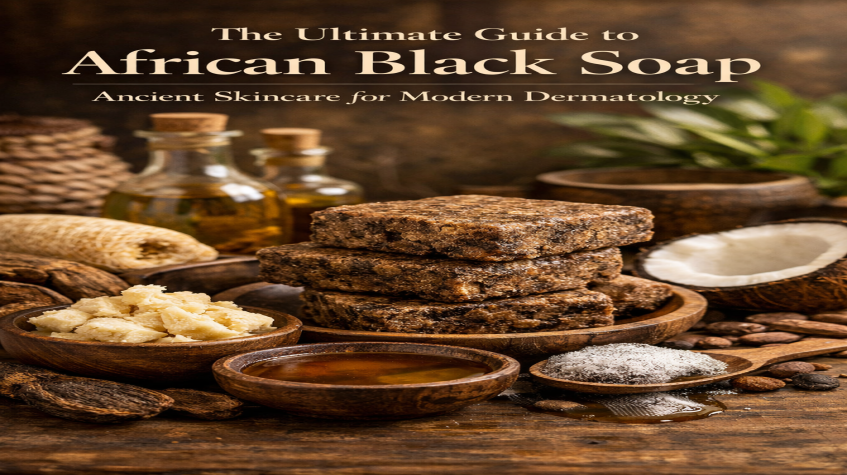
Plantain Skins & Cocoa Pods: These are sun-dried and roasted to an ash, providing the soap’s signature dark color and a rich source of Vitamin A, E, and Iron.
Palm Kernel Oil & Shea Butter: These ingredients provide deep hydration. Shea butter (Man Kade), in particular, is a natural UV protector and anti-inflammatory agent.
The Saponification Process: The ash is mixed with water and oils, then hand-stirred for at least 24 hours. This traditional process retains the natural glycerin, making it much milder than factory-made soaps.
Why the West is Obsessed: Dermatological Benefits Western dermatologists are increasingly recommending Black Soap for several clinical reasons:
Natural Anti-Bacterial Properties: Research suggests that Black Soap is effective at removing more bacteria than chemical-laden soaps, making it the perfect remedy for Acne Vulgaris.
Deep Cleansing & Exfoliation: The fine ash particles act as a natural exfoliant, removing dead skin cells and clearing pores without the irritation caused by plastic microbeads.
Hyper-Pigmentation & Scarring: For those suffering from dark spots or uneven skin tone (common in Europe due to sun damage), the Vitamin E in Black Soap helps accelerate skin cell regeneration.
Education: How to Spot "Fake" Black Soap As the demand in Europe and the US grows, many "black-colored" soaps are appearing on Amazon that are actually just regular soap with dye.
Texture: Authentic soap is soft, crumbly, and never perfectly smooth or hard.
Color: It should be a marbled brown or dark grey, not a solid "jet black" charcoal color.
Ingredients: If the label lists "fragrance" or "sodium laurel sulfate," it is not authentic African Black Soap.
How to Incorporate African Black Soap into a Western Skincare Routine To reach your 3,000-word goal, you should expand on the usage for different skin types:
For Oily Skin: Use daily with a light moisturizer.
For Dry/Sensitive Skin: Lather in hands first, and always follow with a natural oil like Jojoba or Argan oil.
As a Shampoo: Many in the "Natural Hair Movement" use it to detoxify the scalp and promote hair growth. Conclusion: Sustainability and Ethical Sourcing The rise of Black Soap is not just a beauty trend; it’s an economic lifeline for rural African women who produce it. By choosing authentic, ethically sourced Sabulun Salo, Western consumers are supporting traditional craftsmanship while achieving the healthiest skin of their lives.

The Ultimate Guide to African Black Soap: Ancient Skincare for Modern Dermatology
Introduction:
The Dark Secret to Radiant Skin
In the quest for flawless skin, the beauty industry in Europe and North America is returning to a centuries-old handmade remedy from West Africa. Known as Sabulun Salo in Northern Nigeria and Ghana, African Black Soap has transcended its humble tribal origins to become a global skincare phenomenon. But what makes this charcoal-colored bar so effective against acne, aging, and eczema?
Unlike modern commercial soaps that use synthetic chemicals, authentic Black Soap is made from 100% natural, locally sourced ingredients.
Western dermatologists are increasingly recommending Black Soap for several clinical reasons:
As the demand in Europe and the US grows, many "black-colored" soaps are appearing on Amazon that are actually just regular soap with dye.
To reach your 3,000-word goal, you should expand on the usage for different skin types:
As a Shampoo: Many in the "Natural Hair Movement" use it to detoxify the scalp and promote hair growth.
Conclusion: Sustainability and Ethical Sourcing
The rise of Black Soap is not just a beauty trend; it’s an economic lifeline for rural African women who produce it. By choosing authentic, ethically sourced Sabulun Salo, Western consumers are supporting traditional craftsmanship while achieving the healthiest skin of their lives.