HR
HR FreeFree
Description
Pages 1–60)
The Setting:
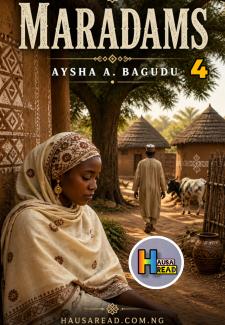
The story is set in a modest, dilapidated mud house in Sokoto. Khairi, a young woman under 23, is shown working tirelessly, weaving traditional mats (zana) to survive. She is frail, exhausted, and visibly suffering, her beauty faded by constant hardship. Her husband, Nura, is a man in his 30s who treats her with extreme cruelty, forcing her to do back-breaking labor while he contributes nothing and abuses her verbally and physically.
The Conflict:
Khairi suffers in silence, subjected to mistreatment by Nura and his family. She finds a brief solace in a friendship with a neighbor, Humaira, who reveals her own tragic history. Humaira explains that she was once wealthy, married to a man named Sani, but he manipulated her into using birth control, left her infertile, and eventually abandoned her after she developed breast cancer and had to undergo a mastectomy.
The Turning Point:
Nura’s fortunes change; he gains wealth, buys a large house, and acquires vehicles and shops. However, he becomes even more abusive. When they move to the new house, he brings a new bride, Salma. Nura’s family and the new bride constantly harass Khairi. Soon after, Nura’s shops catch fire, resulting in a total loss of millions. In a blind rage and blaming Khairi for the misfortune, Nura divorces her irrevocably (Saki Uku—triple talaq) and throws her out of the house. Salma and Nura's family celebrate her departure with joy.
Summary & Analytics
- Core Theme: The story serves as a harsh social commentary on the vulnerability of women in certain patriarchal structures and the "heartlessness of men" (Zuciyar Namiji). The author highlights how women’s loyalty and patience are often met with betrayal.
- Narrative Style: The text uses a "story within a story" technique (Khairi’s history and Humaira’s tragic past) to emphasize the shared suffering of women.
- Pacing: The pace is fast and emotionally heavy. It moves from the depiction of extreme poverty to the sudden, cruel dismissal of the protagonist.
Tone: Melancholic, empathetic, and critical. The author directly addresses the reader, asking them to comment to encourage the continuation of the story, creating a communal storytelling experience.
Character Analysis
- Khairi: A symbol of extreme patience and endurance. Despite the lack of support from her own family (who she has lost contact with) and her husband, she remains stoic until she is unjustly cast out.
- Nura: The embodiment of the "heartless man." He represents entitlement, lack of accountability, and cruelty.
- Humaira: The "tragic mirror." Her story warns Khairi—and the reader—that material comfort does not guarantee a man's loyalty or a woman’s security.
(Pages 61–70)
Page 61–65: The Departure
Khairi stood at the gate of the house she had called home, clutching a small bag containing nothing but a change of clothes and a few personal items. The joy of Salma and Nura’s family rang in her ears like a curse. She had nowhere to go, no money, and no communication with her own family, as Nura had long ago cut her off from them. She began walking aimlessly, her heart heavy with the realization that the years of patience and suffering had resulted in nothing.
Page 66–70: A New Path
As she reached the outskirts of the town, she met an elderly woman named Gwaggo, who lived alone on the edge of the community. Gwaggo was known as a woman of few words, but her heart was soft. Seeing Khairi’s state, she invited her in. Khairi, exhausted, fell into a deep sleep.
When she awoke, she felt a sense of freedom for the first time in years. Though she was technically destitute, she was no longer under the shadow of Nura’s cruelty. Gwaggo encouraged her to use her skills in weaving zana and petty trading to earn a living. The transition was hard—every muscle in Khairi's body ached—but the work gave her a purpose. She began to regain her strength and, slowly, her confidence. Meanwhile, news reached the town that Nura’s business was failing further, and he was beginning to realize that the "blessing" he thought he lost when he threw Khairi out was more than just a wife; it was the foundation of his peace.
Summary of New Developments
The story has entered a "Redemption/Healing" phase. Khairi is no longer a passive victim; she is now taking agency over her survival by finding a new home and a means to support herself. The introduction of Gwaggo provides a maternal figure that Khairi lacked during her marriage.
Analytics & Insights
- The Power of Resilience: The narrative emphasizes that while men like Nura might hold societal power, the resilience of women is a "hidden power" that allows them to rebuild from nothing.
- Symbolic Shift: Moving from the "new house" of Nura to the "small home" of Gwaggo signifies a move away from superficial status toward authentic, simple living.
The Irony of Fortune: Nura’s rapid decline after divorcing Khairi is a classic trope in Hausa literature, used to suggest divine justice—the idea that the person who brings peace to a home is often the source of its prosperity.
Key Observations
- Pacing: The pace has slowed down to focus on Khairi’s internal healing. The author is taking time to show the process of rebuilding one's life.
- Message: The author continues to drive home the message that Zuciyar Namiji (The Heart of a Man) is unpredictable, and that women should focus on their own self-reliance rather than pinning their existence to a spouse.